Between March 2017 and April 2022, I co-founded Caaresys, a radar-based in-cabin monitoring startup for automotive. The product was a small sensor you put in a car that could track the passengers’ vital signs, detect child presence, and classify seat occupancy, all through the seat fabric, with no cameras, no wearables, no onboard medical device. Three product lines came out of it: VitalCaare (respiration, heart rate, heart-rate variability), BabyCaare (child presence detection and cabin occupancy), CabinCaare (seat occupancy and passenger classification).
We sold to Harman (Samsung) in 2022. About ten people on the team at exit. Eleven pilots along the way with the biggest OEMs in the world. For most of those five years, I was the only software person in the company.
This is what that specific shape of role actually looked like, and what I now believe about it with five years of distance and a very different tooling landscape.
What “The Only Software Person” Actually Meant
Caaresys was a hardware company first. The founding thesis was radar: a specific signal-processing insight about reading tiny chest movements through the seat. The team that built it was antenna engineers, signal-processing engineers, firmware people, and mechanical engineers for the enclosure. The product was a device that sits in a car.
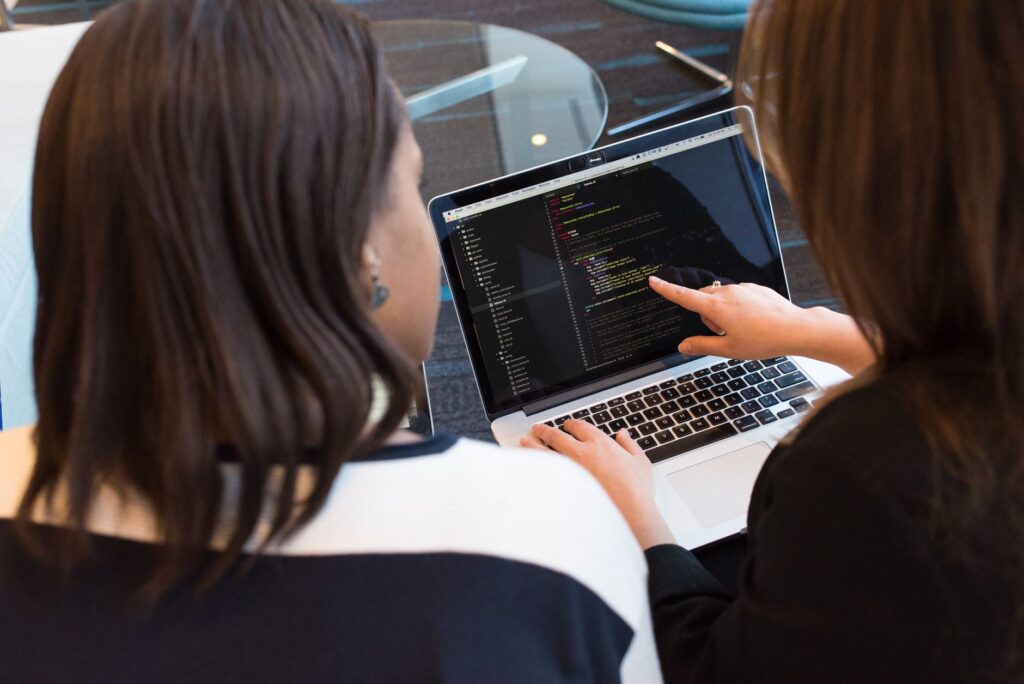
What a device that sits in a car still needs, as it turns out, is a lot of software. A cloud to collect and visualize data for pilots. A mobile app for the baby-monitoring product. A website that both engineers and automotive buyers can take seriously. A dashboard the signal team can use internally. A deployment pipeline for the firmware. A back office that holds together everyone’s accounts, email, calendars, documents. HR when the team crossed from three people to ten.
I did all of that. Not because it was the plan, but because at a small radar startup, there is nobody else who is going to.
How the Hats Accumulated
The title I started with was VP R&D. The hats stacked over time, one at a time, and each addition had a specific trigger moment.
DevOps was first. The cloud datacenter we needed to collect pilot data from customer vehicles was my build, so operating it was my job too. Someone had to be paged when a Tier 1’s pilot upload failed overnight. There was only one someone.
IT was next. Our team grew past the point where you could just share passwords in Slack. Somebody had to pick a Google Workspace, set up SSO, buy the laptops, decide on the password manager, run the recovery when an engineer left and we needed to reclaim their accounts. The job did not come with a job title. The job arrived whether or not anyone claimed it. I claimed it.
HR followed around the time we started hiring quickly. Recruiter conversations, offer letters, onboarding docs, the quiet legal checks you learn you need the second time you hire. A founder has to do the first few of each of those regardless of role. If you are also the person who runs the company’s internal tooling, HR is where that work naturally lives.
By the exit I was formally VP R&D and informally the person who held together DevOps, IT, and HR as functions. On paper this is a disaster. In practice, at a ten-person hardware startup with a technical product and no SaaS complexity, it worked.
The Week in Japan
The specific week I think about most was the second year, in Japan. The accelerator sent one representative from each of six startups. I was the one from Caaresys. The program had me pitching to a different audience every day in a different city: an automotive OEM one morning, a strategic investor group the next afternoon, a government innovation body the day after, a prefectural research lab the day after that. Some sessions had professional translators. Some did not. Some audiences expected a technical-first pitch; some wanted the business case; some wanted the social-good angle around child-presence detection and preventing hot-car fatalities.
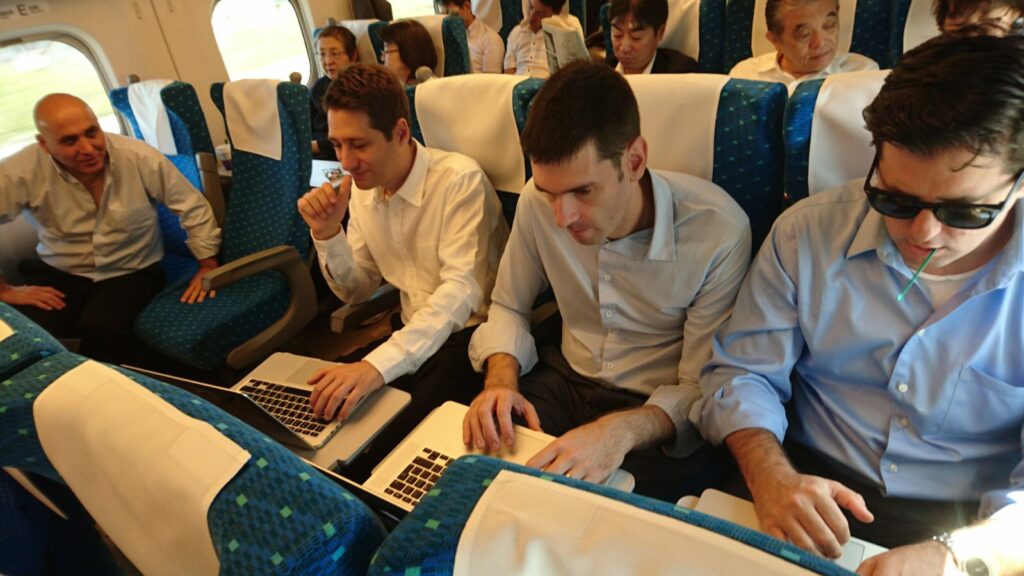
I moved between cities on the shinkansen. The train ride was where the real work happened. I would board with the deck I had used in the last meeting and, over the next ninety minutes, I would re-cut it for the next audience. Different opening slide. Different order of product line emphasis. Different market framing. Sometimes a different ending slide depending on whether the audience was expected to be an investor, a customer, or a partner.
I did not rebuild the deck between cities. I did not have the energy or the hours. I reshaped it. The product was the same product. The pitch was the same core pitch. The specific framing of each room was different, and that difference was the entire reason some of those conversations led to pilots and others did not.
By Friday I was exhausted. I was also better at a specific skill than I had been Monday morning: taking the same artifact and re-shaping it for the specific room in front of me. That skill turned out to be one of the most load-bearing things I learned in all five years at Caaresys. It is also the skill I now watch AI-era founders undervalue.
The Eleven Pilots
Over five years we ran eleven pilots with the biggest OEMs in the world. The pattern of each one was the same shape, and the specifics changed every time.
Each pilot started with a requirements conversation. What test cases does this OEM care about. Which seating positions. Which occupant profiles. Which specific signals matter to their safety or comfort team. Which signals they want benchmarked against what reference.
Then we rented the specific vehicle. Pilots were vehicle-specific by nature; a result on a sedan did not transfer to an SUV, and a result on one OEM’s cabin did not transfer to another’s. The car came in, usually for a few weeks.
Then we picked the hardware install location in that car. Radar is a geometry problem before it is a signal processing problem. Where the sensor sits relative to the seats, the roof lining, the b-pillar, and the materials around it changes what the raw signal looks like. Picking the install location was a judgment call that took the hardware team, the signal team, and me a few passes to get right for each new cabin.
Then we calibrated. Each install location had its own baseline. The signal team ran the calibration passes; my job was to make sure the data was flowing cleanly from the sensor into the cloud datacenter and that the dashboards the OEM would eventually see were showing what the signal team expected them to show.
Then we ran the measurement campaign. Every test use case the OEM had asked about in the requirements, with real occupants, across the seat positions and conditions they cared about. For some pilots that was dozens of recordings. For others, hundreds.
Then we wrote the report. Not a marketing deck. A results report, with the raw numbers, the methodology, the confidence intervals, the known limitations, the specific use cases where the system cleared the OEM’s threshold and the ones where it did not. The report was what the OEM’s internal technical team would read and use to decide whether a second-phase engagement happened.
Eleven of those, over five years, with the biggest OEMs in the world. The report format reshaped per customer. The hardware install location reshaped per car. The test campaign reshaped per use case list. The underlying product was the same product the whole time.
The Exit
In 2022 we sold to Harman, a Samsung subsidiary. About ten people on the team. The deal mechanics are not the useful part of the story, and I will not get into them in a public post. The useful part is the five years that got us there.
The 2026 Version of This Pattern
Two specific pieces of what I lived at Caaresys show up in almost every conversation I have now with AI-first founders. The first piece has gotten more important. The second has gotten easier.
Reshape, do not rebuild, per audience
The Japan train scene is a 2017 cousin of a problem AI startups are living in 2026. Every enterprise pilot is its own audience. The product is the same product. The capabilities are the same capabilities. What has to re-shape per pilot is the demo, the eval set the team ran before the meeting, the specific vertical framing of what the model does, the benchmark the room will care about. The teams that close pilots are the teams that have internalized that this reshape work is the actual job in the sales cycle, not a nice-to-have.
AI tooling makes this easier than it was for us on the shinkansen. A customer’s industry context, their published benchmarks, the specific language their technical team uses, all of that can now be gathered and worked into a vertical-shaped version of the demo overnight by the pre-sales person and an LLM. The teams that treat this capability as “we can be lazier now” close fewer pilots. The teams that treat it as “we can reshape for every room, not just the biggest three” close more.
Hats compound at seed stage; AI now drops two or three
The accumulation of VP R&D plus DevOps plus IT plus HR on one person was a 2017 budget constraint. The economics only worked because we were small enough that each of those hats was still a part-time job. The second any one of them became a full-time job, the setup would have broken.
In 2026 the same solo founder role is more sustainable, not because the person is better, but because AI tooling takes real chunks of DevOps (infra-as-code generation, incident triage, runbook drafting), IT (onboarding scripts, policy templates, account provisioning), and HR (job-description generation, first-pass candidate screening, offer-letter drafting) off the human. The hats still accumulate. Two or three of them now have an AI copilot sitting under them.
What has not changed, and will not change, is that the VP R&D hat and the co-founder hat still need the human. The judgment calls those two hats make are the ones AI cannot take over without breaking the thing it is supposed to protect. A founder who leans on AI to drop the operational hats so they can spend more hours on the two load-bearing ones is doing it right. A founder who leans on AI to make all the hats cheaper so they can wear more of them is heading toward the same burnout that nearly got me a few times.
The Short Version
Being the only software person at a hardware startup, for five years, taught me two things I now watch AI-era founders rediscover.
Reshape per audience, every time. The product is the product. The framing is the job.
Let the AI drop the operational hats so you can spend your hours on the ones that only a human can wear.
Let’s Talk
If you are the solo technical co-founder of an early-stage startup, or a founder trying to figure out which of your hats to drop first as the team grows, that is exactly the kind of decision I work through with founders. No pitch. Happy to talk through the specific shape of your team and tell you what I would do. Reach out.